
Musterdruck & Naturfasern

Tips for Sewing with Cotton Thread

Schlagwort: cotton thread

  • Tips for Sewing with Cotton Thread

    Tips for Sewing with Cotton Thread

    Disclaimer: I am a self taught home sewist with an interest in natural materials.  The advice that I am sharing is based on general best practices and a bit of personal experience. Hopefully it will help you think about how you sew. 
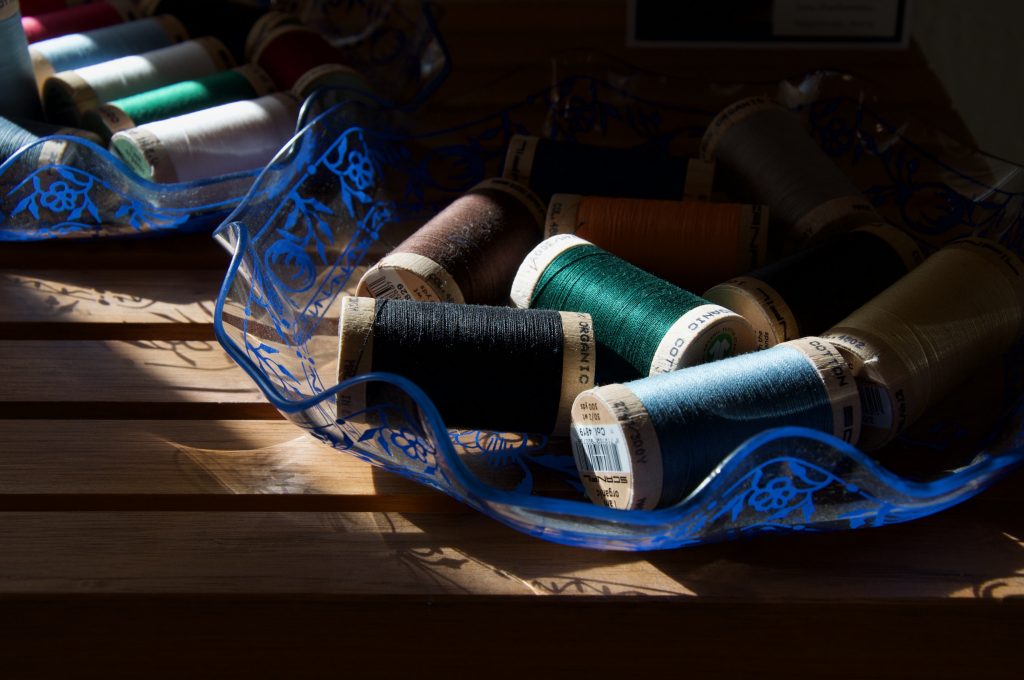
    Much of the enjoyment I get from sewing comes from the materials I use.   I like the feeling of natural fiber fabric, and I personally like the way that thread made from natural fibers feels somehow a little more “alive”.  It is a subtle distinction, but I personally also prefer the way that a seam sewn with cotton thread looks.  (And the wooden spools that Scanfil uses for their thread just makes sewing feeling a little more special). 

    I am also very hard on my clothing.  I wear the things I sew, and outside of a few special pieces, I wear them as part of my bike commuting, running around in the park, occasionally climbing trees, active lifestyle. So far, I have found that seams sewn with cotton thread hold up just fine, but through talking to other sewists I have come to realize that there is an idea that cotton thread is somehow difficult to sew with.  I have not found that to be the case, but I also switched to cotton thread very early in my time sewing, and there are some adjustments that my specific sewing setup forced me to make that may be helpful for other people.  So, here are a few of the things that I find helpful when sewing with cotton thread as compared to sewing with polyester thread. 

    When sewing with cotton thread the thing to remember is that it doesn’t stretch, and it is weak enough that it can often by snapped simply by pulling on it.   Much of the difference between sewing with cotton thread and polyester thread comes down to reducing the stress on your thread, both during sewing and while wearing the garment. 

    Despite being a little more delicate to sew with, I have found that cotton thread holds up about as well as the fabric does. For example:
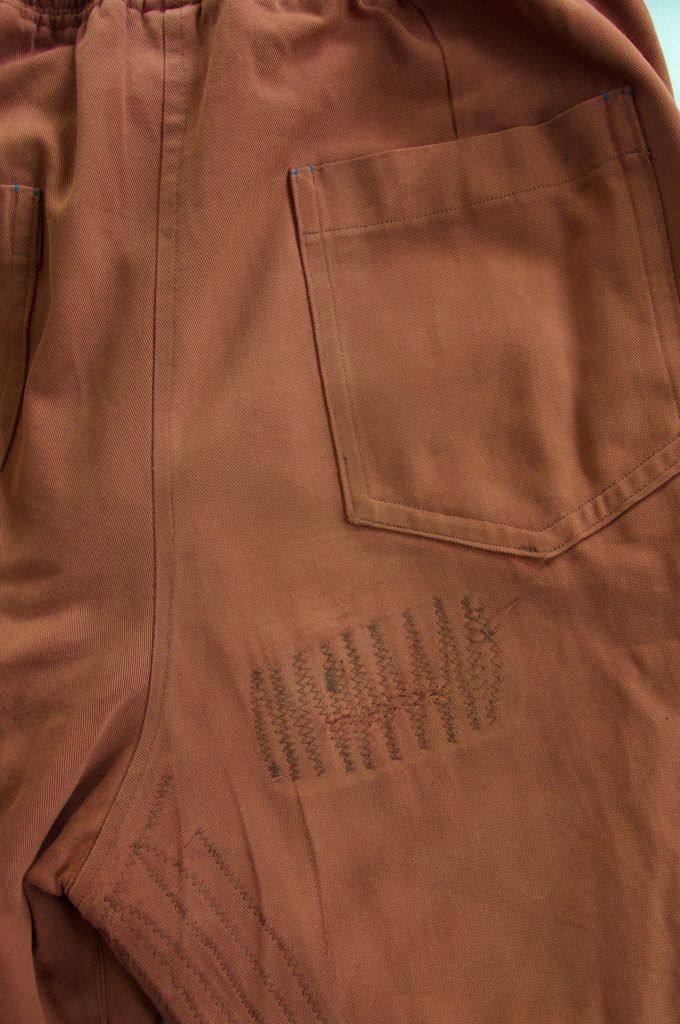
    Freemantle Pants - over three years old

    The above pants were sewn with Scanfil Organic Cotton thread in 50/2 weight (not the heavier, recommended-for-trousers 30/2 weight) and are over three years old. There are a few places where the thread has worn through and the seams will need to be re-sewn, but in this case the 8oz cotton twill fabric needed repair long before I started having problems with the seams.

    Suggestions, in no particular order:

    Reduce the stress:

    Decrease the stitch length.  More stitches per centimeter leads to less strain on any individual stitch.   More stitches in a shorter amount of seam also distributes any stretching force across more stitches and more fabric, giving the seam a little more spring that doesn’t rely on the ability of the thread to stretch.  A shorter stitch length does mean that sewing a seam takes longer – there is a reason that fast fashion uses longer stitch lengths, but I like sewing, so taking a little longer on a seam is not a problem. 

    Practice sewing smoothly.  Sudden sharp increases in speed can put extra stress on the thread, and if there is any extra friction in the system, this can cause the thread to snap.

    Generally good sewing habits that become a little more important when using cotton thread:

    Match thread to needle:  if the eye of the needle is a little too small, it can create extra friction and strain on the thread, leading to the thread snapping (among other problems). 

    Double check your tension: Cotton thread is spun from many short fibers (even long staple cotton is “short” when compared to polyester) which means that it will move through your machine differently than polyester thread.  I generally work with a scrap of fabric from the project I am working on, until the stitch length and tension work well together. 

    Even good cotton thread will leave more lint in your machine when compared to polyester thread.  Between projects I make a habit of brushing out all the places that lint tends to build up.

    Advanced level changes  

    (These are not necessary for successful sewing with cotton thread, but to my mind they make sewing more interesting)

    Think about your seams or what seam options your pattern calls for.  French seams or lapped seams are great for redistributing strain.  Bonus, they create a clean inside finish, with no need for an overlocker or zig-zag stitch. 

    Think about how difficult it might be to re-sew a seam later if it does wear through.  If possible, re-think the sewing order in high stress areas to make later re-sewing easier. 

    For all that sewing with cotton thread can take a little more thought and practice when compared to polyester, I find that it is entirely worth the effort.
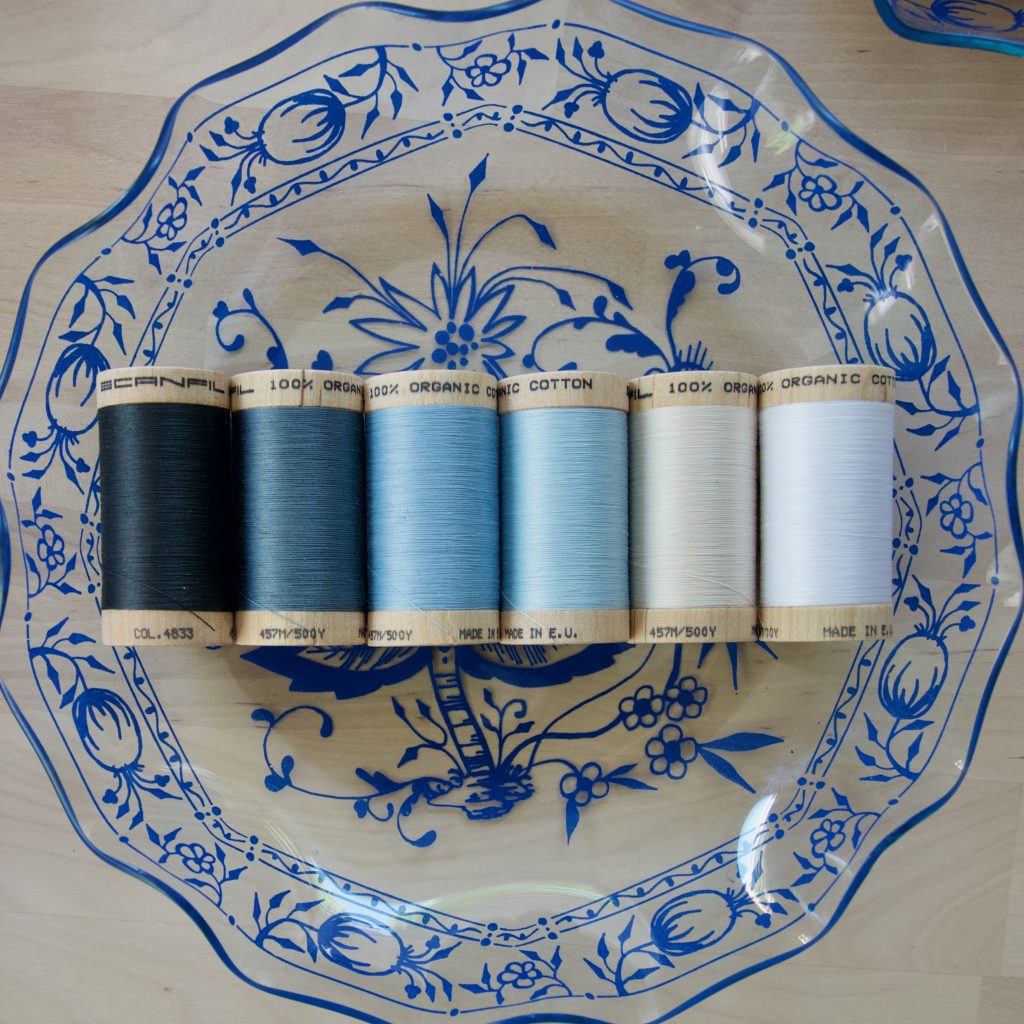
  • Measuring Thread Size or, what do those numbers mean?

    Measuring Thread Size or, what do those numbers mean?

    Hier klicken für Deutsch

    If you are new to sewing, or new to thinking about thread and what it is made of, you may be confused by the different numbers used to denote thread size.    You are not alone in your confusion.  Several different standards for denoting thread “thickness” have developed over time, geography, and industry (many of which  are still in use today) and to be even more confusing, when thread is exported/imported it is sometime relabelled/mis-labled to better fit the predominant scale in use in the importing country. 

    Different thread measuring systems use different units of measurement, but for our purposes the two major systems can basically be summarized as “how long is a thread that weighs x amount” or from the opposite direction, “if you have x amount of thread, how much will it weigh”? These two systems yield completely opposite numbering systems, and cause much confusion.  

    Cotton thread is generally labelled with a weight system (denoted “wt” on the label).  In this system one starts with a standard weight of thread and measures how long it is – so for example, 1 gram of cotton can be spun into a thread that is 30 meters long or it can be spun into a thread that is 50 meters long.   They will both contain the same weight of cotton, and so the 30 meter long thread will be thicker than the 50 meter thread.  In this way of measuring threads, bigger numbers = thinner thread.  

    Sometimes the thread label stops there – with a “#50” or a “50wt” but sometimes the system contains more information.  To understand the next part of the explanation it is helpful to know that cotton thread, like knitting yarn, is made up of thinner strands of fibre that have been twisted into “plies” which are then twisted together to form the thread. In the system used to describe cotton threads  the second number shows the number of plies (for example “50/2wt”  means the finished thread is made of two plies). 

    Some systems work in the other direction, and instead of asking “how long is a thread that weighs 1 gram” will ask “ how much does a given length of thread weigh”.   In these systems the bigger number = thicker thread.  These systems are often used for threads made of synthetic materials.  

    It is nice to know roughly what these systems of measurement mean, especially when ordering online, but the exact meaning is mostly useful for large-scale clothing manufacturers.  For people sewing at home it is important to understand what the measurements mean relative to each other.  The general advice is to choose thinner thread for lighter weight fabrics and thicker threads for heavier fabrics, both to avoid weighing the fabric down, and to hopefully prevent damage to the fabric if too much force is applied to the seam (better the thread rip than the fabric rip). 

    Scanfil Fine Thread advertises the 30/2 wt Organic Cotton thread as the equivalent of a “universal weight thread”.  I’m a little unsure what exactly they mean by this, but generally I use the 30/2wt  for mid-weight fabrics, and the 50/2 for lighter weight fabrics (although I have also successfully used the 50/2wt  to sew loose fitting pants out of mid-weight twill).  You will also want to think about your needle size.   According to Schmetz Needles, the general rule is that the “eye of the needle should be 40% larger than the diameter of the thread”.  But because of the various properties of polyester vs. cotton, you may want to try a slightly larger needle size when working with cotton thread, especially if you have problems with missed stitches.  

    I also use 50/2 wt thread to zig-zag stitch my fabric edges, either at the beginning of sewing if I have fabric that wants to unravel, or to neaten up and finish my edges.  I do not have an Overlock machine, but I have several customers who are experimenting with using the 50/2wt with their Overlock machines.   Scanfil Fine Threads packages their thread in larger amounts, offering 5000 yards of 50/2 wt or 3000 yard of 30/2 weight on a wooden cones.  I do not have any in stock, but I am happy to order them on request. 

    Scanfil Bio-Baumwollgarn 50/2 wt
    Scanfil Bio-Baumwollgarn 50/2 wt