Musterdruck & Naturfasern

Tipps zum Nähen mit Baumwollgarn

Kategorie: Inspiration

  • Tipps zum Nähen mit Baumwollgarn

    Tipps zum Nähen mit Baumwollgarn

    Anmerkung: Ich bin eine autodidaktische Selbstnäherin mit einem Interesse an natürlichen Materialien. Die Tipps, die ich hier teile, basieren auf allgemeinen bewährten Methoden und ein wenig persönlicher Erfahrung. Hoffentlich helfen sie dir dabei, deine Herangehensweise beim Nähen zu überdenken.
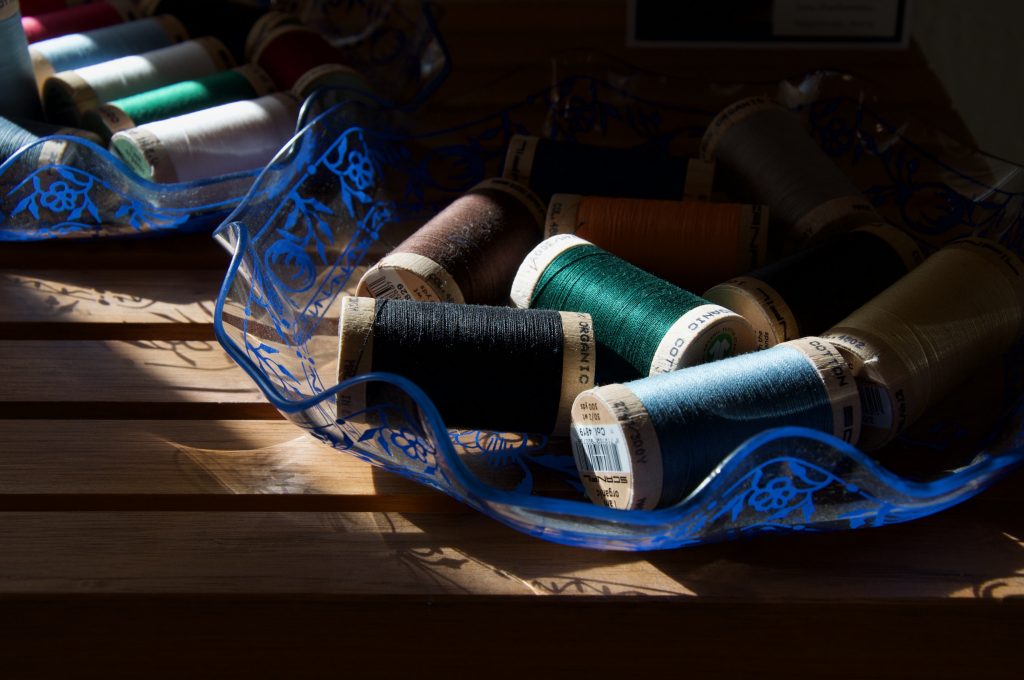
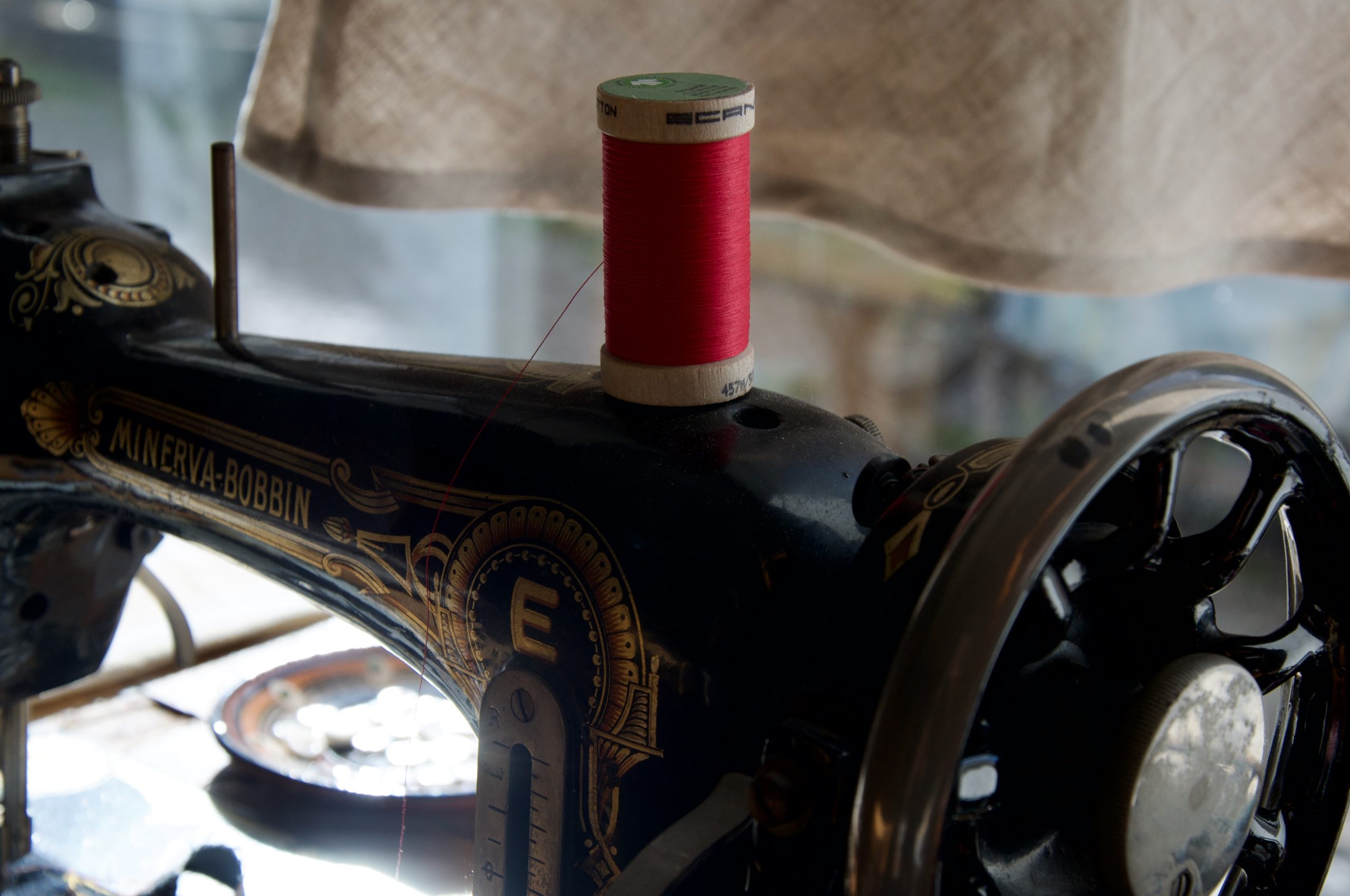
    Ein Großteil der Freude, die mir das Nähen bereitet, rührt von den Materialien her, die ich verwende. Ich mag das Gefühl von Stoffen aus Naturfasern, und mir persönlich gefällt, dass sich Garn aus Naturfasern irgendwie ein bisschen „lebendiger“ anfühlt. Es ist ein subtiler Unterschied, aber ich persönlich mag auch das Aussehen einer mit Baumwollgarn genähten Naht lieber. (Und die Holzspulen, die Scanfil für sein Garn verwendet, machen das Nähen einfach zu etwas ganz Besonderem).

    Außerdem beanspruche ich meine Kleidung sehr stark. Ich trage die Sachen, die ich nähe, und abgesehen von ein paar besonderen Stücken trage ich sie im Rahmen meines aktiven Lebensstils – beim Pendeln mit dem Fahrrad, beim Herumtollen im Park und gelegentlich auch beim Klettern auf Bäume. Bislang habe ich die Erfahrung gemacht, dass mit Baumwollgarn genähte Nähte gut halten, aber durch Gespräche mit anderen Näherinnen und Nähern ist mir klar geworden, dass die Vorstellung besteht, mit Baumwollgarn sei das Nähen irgendwie schwierig. Ich habe das nicht so empfunden, aber ich bin auch schon sehr früh in meiner Nähkarriere auf Baumwollgarn umgestiegen, und es gibt einige Anpassungen, zu denen mich meine spezielle Nähausstattung gezwungen hat, die für andere vielleicht hilfreich sein könnten. Hier sind also ein paar Dinge, die ich beim Nähen mit Baumwollgarn im Vergleich zum Nähen mit Polyestergarn als hilfreich empfinde.

    Beim Nähen mit Baumwollgarn muss man beachten, dass es sich nicht dehnt und so wenig reißfest ist, dass es oft schon durch einfaches Ziehen reißt. Ein Großteil des Unterschieds zwischen dem Nähen mit Baumwollgarn und Polyestergarn besteht darin, die Belastung des Garns zu verringern – sowohl während des Nähens als auch beim Tragen des Kleidungsstücks. 

    Obwohl das Nähen damit etwas heikler ist, habe ich festgestellt, dass Baumwollgarn etwa genauso lange hält wie der Stoff selbst. Zum Beispiel:
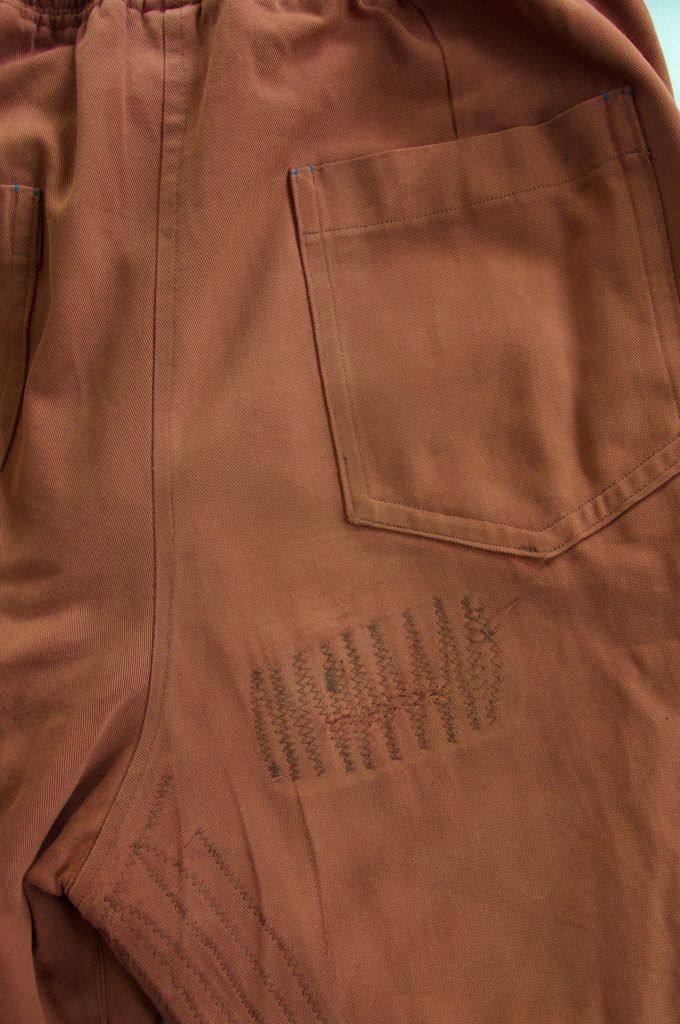
    Freemantle Pants - over three years old

    Die oben abgebildete Hose wurde mit Scanfil-Garn aus Bio-Baumwolle der Stärke 50/2 genäht (nicht mit der dickeren Stärke 30/2, die für Hosen empfohlen wird) und ist bereits über drei Jahre alt. An einigen Stellen ist das Garn durchgelaufen, sodass die Nähte neu genäht werden müssen, aber in diesem Fall musste der 8-Unzen-Baumwoll-Twill-Stoff schon lange repariert werden, bevor ich Probleme mit den Nähten bekam.

    Vorschläge, in keiner bestimmten Reihenfolge:

    Stress abbauen:

    Die Stichlänge verkürzen. Mehr Stiche pro Zentimeter führen zu einer geringeren Belastung jedes einzelnen Stichs. Mehr Stiche auf einer kürzeren Nahtlänge verteilen zudem die Dehnungskräfte auf mehr Stiche und mehr Stoff, wodurch die Naht etwas elastischer wird, ohne dass sie auf die Dehnbarkeit des Fadens angewiesen ist. Eine kürzere Stichlänge bedeutet zwar, dass das Nähen einer Naht länger dauert – es gibt einen Grund, warum in der Fast-Fashion-Industrie längere Stichlängen verwendet werden –, aber ich nähe gerne, daher ist es für mich kein Problem, mir für eine Naht etwas mehr Zeit zu nehmen. 

    Üben, gleichmäßig zu nähen. Plötzliche, starke Geschwindigkeitssteigerungen können den Faden zusätzlich belasten, und wenn es im System zu zusätzlicher Reibung kommt, kann dies dazu führen, dass der Faden reißt.

    Allgemeine gute Nähgewohnheiten, die bei der Verwendung von Baumwollgarn etwas wichtiger werden:

    Passen Sie den Faden an die Nadel an: Wenn das Nadelöhr etwas zu klein ist, kann dies zu zusätzlicher Reibung und Belastung des Fadens führen, was unter anderem dazu führen kann, dass der Faden reißt. 

    Überprüfen Sie die Fadenspannung: Baumwollgarn wird aus vielen kurzen Fasern gesponnen (selbst langstapelige Baumwolle ist im Vergleich zu Polyester „kurz“), was bedeutet, dass es sich in einer Nähmaschine anders verhält als Polyestergarn. Ich arbeite in der Regel mit einem Stoffrest aus dem aktuellen Projekt, bis Stichlänge und Fadenspannung gut aufeinander abgestimmt sind. 

    Passen Sie den Faden an die Nadel an: Wenn das Nadelöhr etwas zu klein ist, kann dies zu zusätzlicher Reibung und Belastung des Fadens führen, was unter anderem dazu führen kann, dass der Faden reißt. 

    Die Fadenspannung überprüfen: Baumwollgarn wird aus vielen kurzen Fasern gesponnen (selbst langstapelige Baumwolle ist im Vergleich zu Polyester „kurz“), was bedeutet, dass es sich in einer Nähmaschine anders verhält als Polyestergarn. Ich arbeite in der Regel mit einem Stoffrest aus dem aktuellen Projekt, bis Stichlänge und Fadenspannung gut aufeinander abgestimmt sind. 

    Selbst guter Baumwollfaden hinterlässt im Vergleich zu Polyesterfaden mehr Flusen in der Nähmaschine. Zwischen den Projekten mache ich es mir zur Gewohnheit, alle Stellen auszubürsten, an denen sich Flusen ansammeln.

    Änderungen auf fortgeschrittenem Niveau

    (Diese sind für das erfolgreiche Nähen mit Baumwollgarn zwar nicht notwendig, machen das Nähen meiner Meinung nach aber interessanter.)

    Denken über die Nähte nach oder darüber, welche Nahtvarianten das Schnittmuster vorsieht. Französische Nähte oder überlappende Nähte eignen sich hervorragend, um die Belastung neu zu verteilen. Ein weiterer Vorteil: Sie sorgen für einen sauberen Innenabschluss, ohne dass eine Overlockmaschine oder ein Zickzackstich erforderlich ist. 

    Wenn eine Naht später einmal durchgescheuert ist, überlege dir, wie schwierig es sein könnte, sie neu zu nähen. Überdenke nach Möglichkeit die Nähreihenfolge an stark beanspruchten Stellen, um ein späteres Nachnähen zu erleichtern. 

    Auch wenn das Nähen mit Baumwollgarn im Vergleich zu Polyester etwas mehr Überlegung und Übung erfordert, finde ich, dass sich der Aufwand auf jeden Fall lohnt.
  • Tips for Sewing with Cotton Thread

    Tips for Sewing with Cotton Thread

    Disclaimer: I am a self taught home sewist with an interest in natural materials.  The advice that I am sharing is based on general best practices and a bit of personal experience. Hopefully it will help you think about how you sew. 

    Much of the enjoyment I get from sewing comes from the materials I use.   I like the feeling of natural fiber fabric, and I personally like the way that thread made from natural fibers feels somehow a little more “alive”.  It is a subtle distinction, but I personally also prefer the way that a seam sewn with cotton thread looks.  (And the wooden spools that Scanfil uses for their thread just makes sewing feeling a little more special). 

    I am also very hard on my clothing.  I wear the things I sew, and outside of a few special pieces, I wear them as part of my bike commuting, running around in the park, occasionally climbing trees, active lifestyle. So far, I have found that seams sewn with cotton thread hold up just fine, but through talking to other sewists I have come to realize that there is an idea that cotton thread is somehow difficult to sew with.  I have not found that to be the case, but I also switched to cotton thread very early in my time sewing, and there are some adjustments that my specific sewing setup forced me to make that may be helpful for other people.  So, here are a few of the things that I find helpful when sewing with cotton thread as compared to sewing with polyester thread. 

    When sewing with cotton thread the thing to remember is that it doesn’t stretch, and it is weak enough that it can often by snapped simply by pulling on it.   Much of the difference between sewing with cotton thread and polyester thread comes down to reducing the stress on your thread, both during sewing and while wearing the garment. 

    Despite being a little more delicate to sew with, I have found that cotton thread holds up about as well as the fabric does. For example:

    Freemantle Pants - over three years old

    The above pants were sewn with Scanfil Organic Cotton thread in 50/2 weight (not the heavier, recommended-for-trousers 30/2 weight) and are over three years old. There are a few places where the thread has worn through and the seams will need to be re-sewn, but in this case the 8oz cotton twill fabric needed repair long before I started having problems with the seams.

    Suggestions, in no particular order:

    Reduce the stress:

    Decrease the stitch length.  More stitches per centimeter leads to less strain on any individual stitch.   More stitches in a shorter amount of seam also distributes any stretching force across more stitches and more fabric, giving the seam a little more spring that doesn’t rely on the ability of the thread to stretch.  A shorter stitch length does mean that sewing a seam takes longer – there is a reason that fast fashion uses longer stitch lengths, but I like sewing, so taking a little longer on a seam is not a problem. 

    Practice sewing smoothly.  Sudden sharp increases in speed can put extra stress on the thread, and if there is any extra friction in the system, this can cause the thread to snap.

    Generally good sewing habits that become a little more important when using cotton thread:

    Match thread to needle:  if the eye of the needle is a little too small, it can create extra friction and strain on the thread, leading to the thread snapping (among other problems). 

    Double check your tension: Cotton thread is spun from many short fibers (even long staple cotton is “short” when compared to polyester) which means that it will move through your machine differently than polyester thread.  I generally work with a scrap of fabric from the project I am working on, until the stitch length and tension work well together. 

    Even good cotton thread will leave more lint in your machine when compared to polyester thread.  Between projects I make a habit of brushing out all the places that lint tends to build up.

    Advanced level changes  

    (These are not necessary for successful sewing with cotton thread, but to my mind they make sewing more interesting)

    Think about your seams or what seam options your pattern calls for.  French seams or lapped seams are great for redistributing strain.  Bonus, they create a clean inside finish, with no need for an overlocker or zig-zag stitch. 

    Think about how difficult it might be to re-sew a seam later if it does wear through.  If possible, re-think the sewing order in high stress areas to make later re-sewing easier. 

    For all that sewing with cotton thread can take a little more thought and practice when compared to polyester, I find that it is entirely worth the effort.

  • Jeans! (a bit of sewing inspiration)

    Jeans! (a bit of sewing inspiration)

    (Author’s note, the sewing pattern and fabric mentioned in this post were purchased at retail price.  I am very pleased with the fabric from Selvage and would love to figure out some sort of partnership in the future, but as of this writing (16.September. 2026) there is no such relationship.  SELU does currently have a partnership with smartPATTERN, and offers a rebate code for the printing of sewing patterns from smartPATTERN.  I will admit that this partnership gave me the push I needed to try sewing my first pair of jeans, but I like to think that it has not influenced my feelings for their patterns.)  

    Jeans are probably one of the most culturally complicated pieces of clothing in our wardrobes.  Aside from questions like “do they actually fit” and “are they comfortable” they signal cultural belonging (or not) and cultural relevance (or not) more than another other piece of clothing.  One can choose to be on-trend, or stubbornly on your own trend, or somehow miss the mark entirely and just have jeans that are can’t-put-your-finger-on-it not quite right.  And that is all before even thinking about fabric.  As we all know denim has its own passionate culture, with fine attention paid to weights and source and dyes.   I found (and still find) it all a bit overwhelming, and so decided to avoid the whole topic entirely and stick to sewing trousers.  

    But then I sewed the KEJA trousers designed by smartPATTERN for TAUKO Magazine issue no 18, and had the good fortune to meet the designers behind smartPattern at a TAUKO event. 

    The pattern

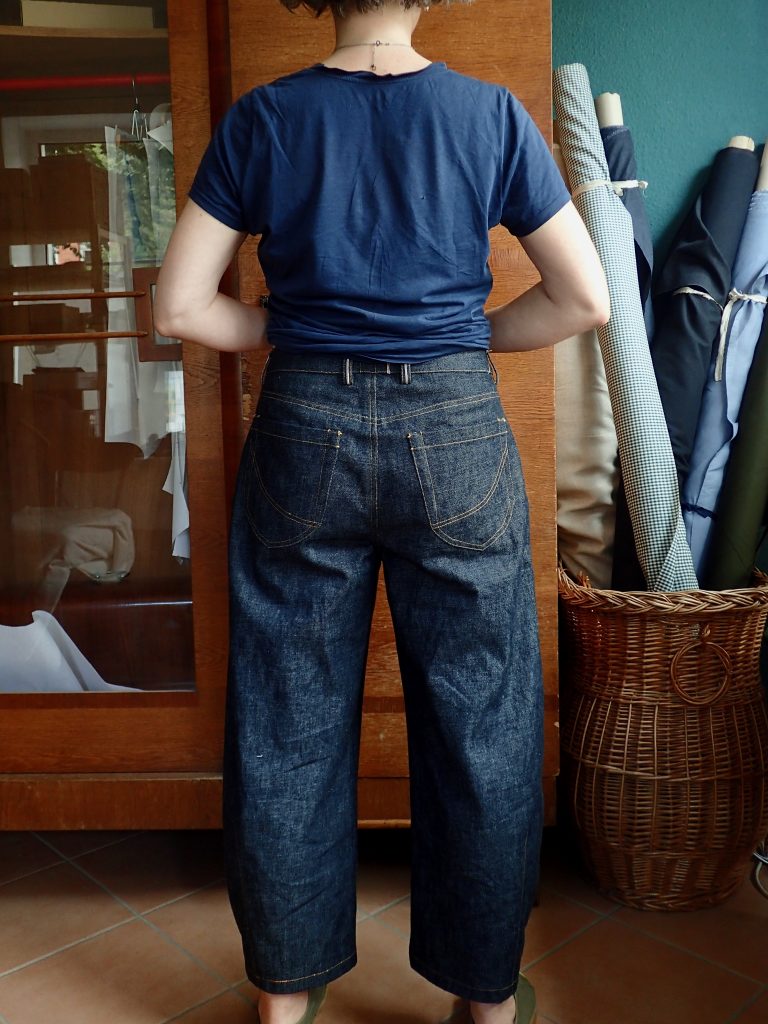
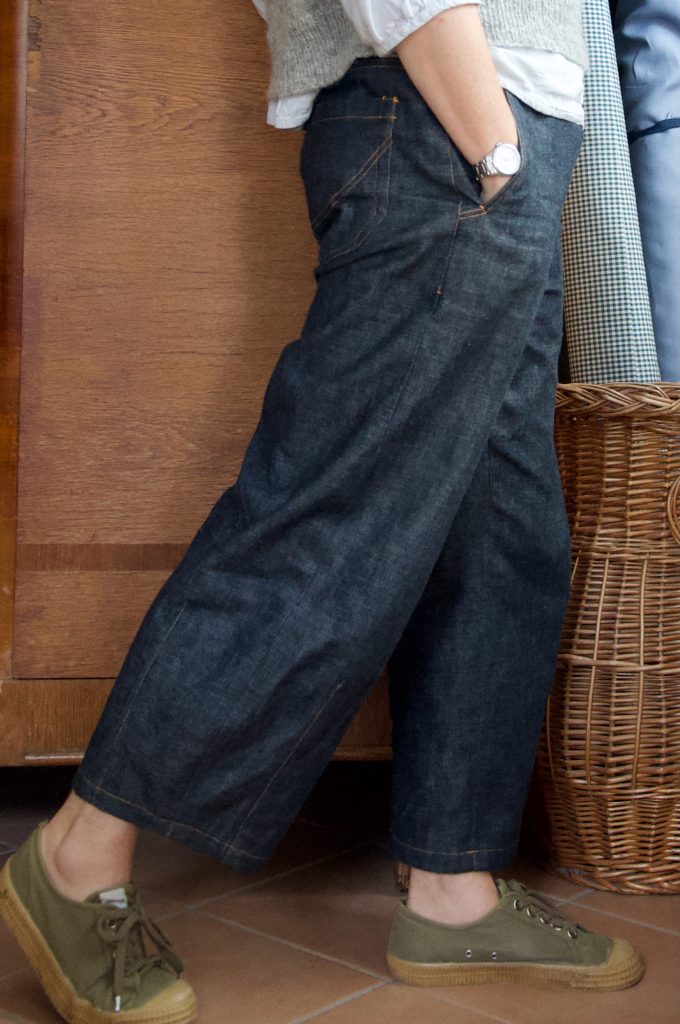
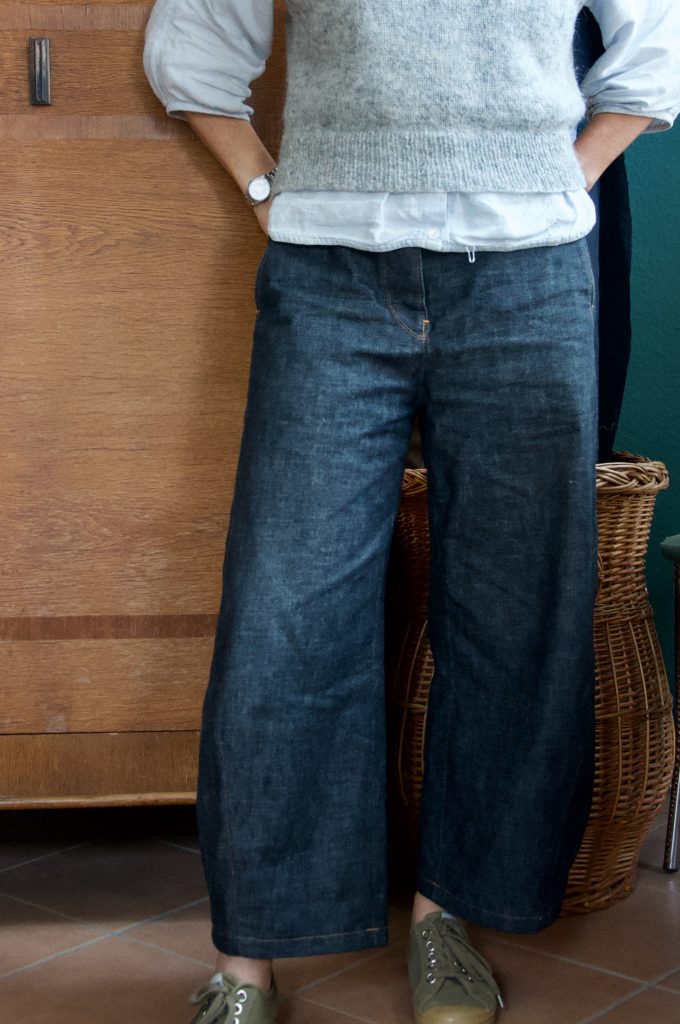
    One can buy smartPATTERN designs as one buys any normal sewing pattern, with a set design graded into a range of sizes, or one can follow their excellent video tutorials to measure various parts of your own body, and receive that design graded exactly to the measurements you provide.  (You also then get to choose from a variety of pocket types, leg lengths, and in the case of their pattern for Barrel Jeans, exactly how much barreling and how the bend is achieved).  As someone who always has to grade between hip and waist sizes (and needs to shorten the leg a bit) I found the custom pattern feature fascinating.  

    Instead of traditional written instructions, the instruction for smartPATTERN patterns are actually a series of video tutorials.  I found this to be a little confusing at first, but as someone who often searches for video tutorials to help learn unfamiliar steps, I quickly got used to it. 

    The fabric

    For the fabric I chose to order a 10.7 oz selvage denim (100% cotton) from the promisingly named Selvage, a shop in Berlin that imports Japanese denim.   I am not a classic denim aficionado, but if I am going to go through the trouble of sewing something, I am going to use fabrics that interest me in some way.  “Japanese Selvage Denim” has the kind of trendy cachet that generally makes me roll my eyes a bit, but after reading descriptions of how the weave actually does vary from denim produced on modern machines, I decided to look past the trendiness and give it a try.  And I am glad that I did. 

    I am very pleased with the results. 

    The Results

    As always, it is the little details that make sewing for yourself so wonderful. 


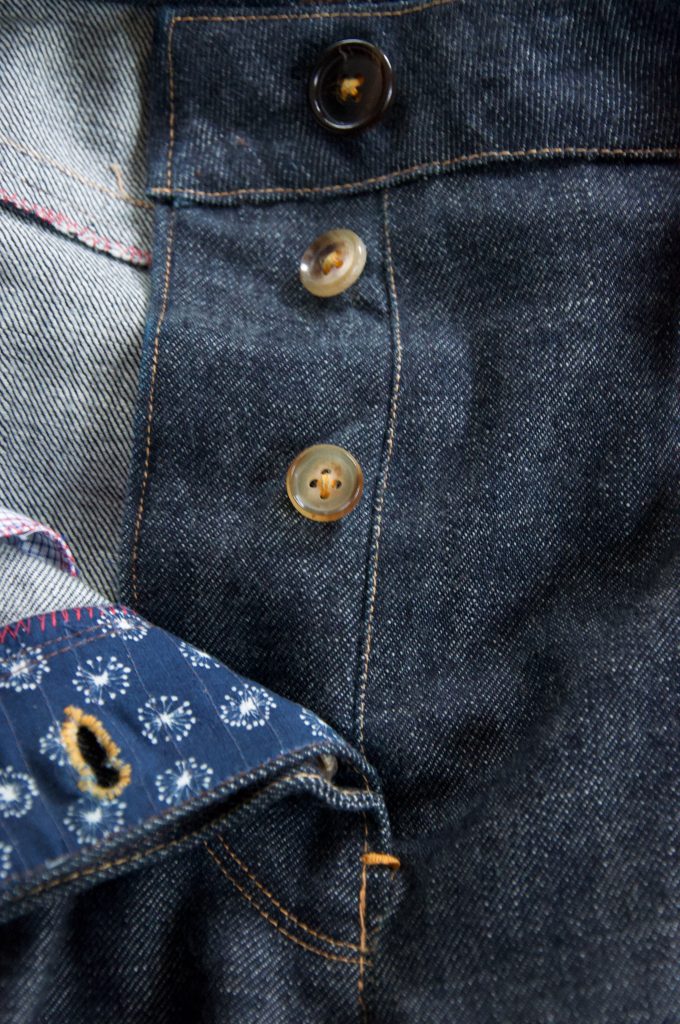
    Real Horn Buttons
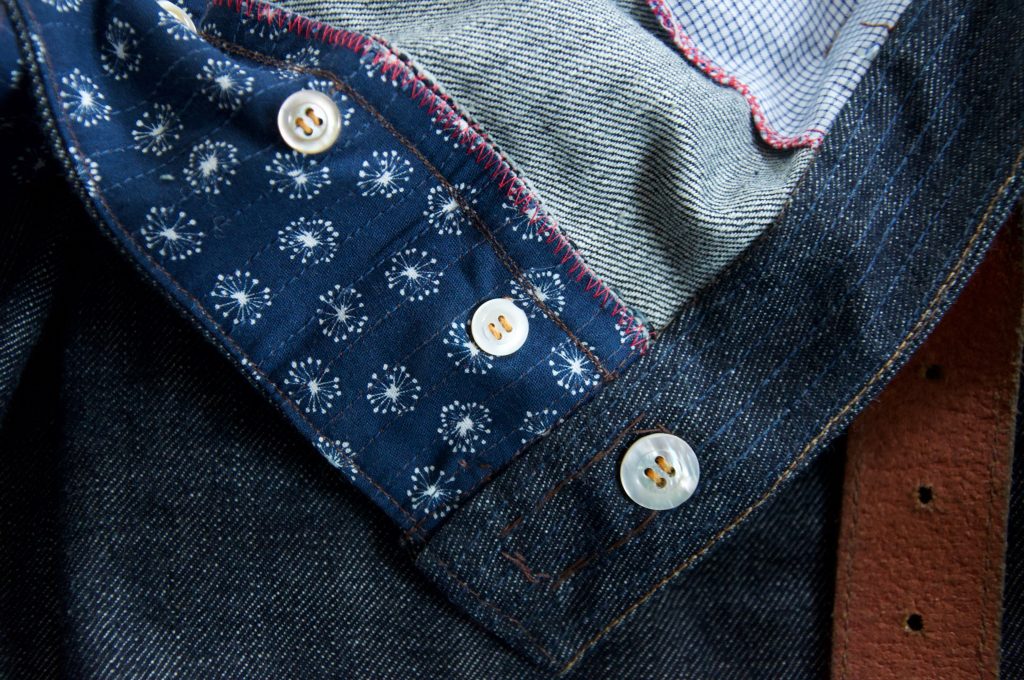
    To provide a more solid anchor from buttons, I prefer to use backing buttons rather than letting the fabric take the strain.  Here I am using mother of pearl buttons on the back (personal collection)  and horn buttons on the front (available at SELU).
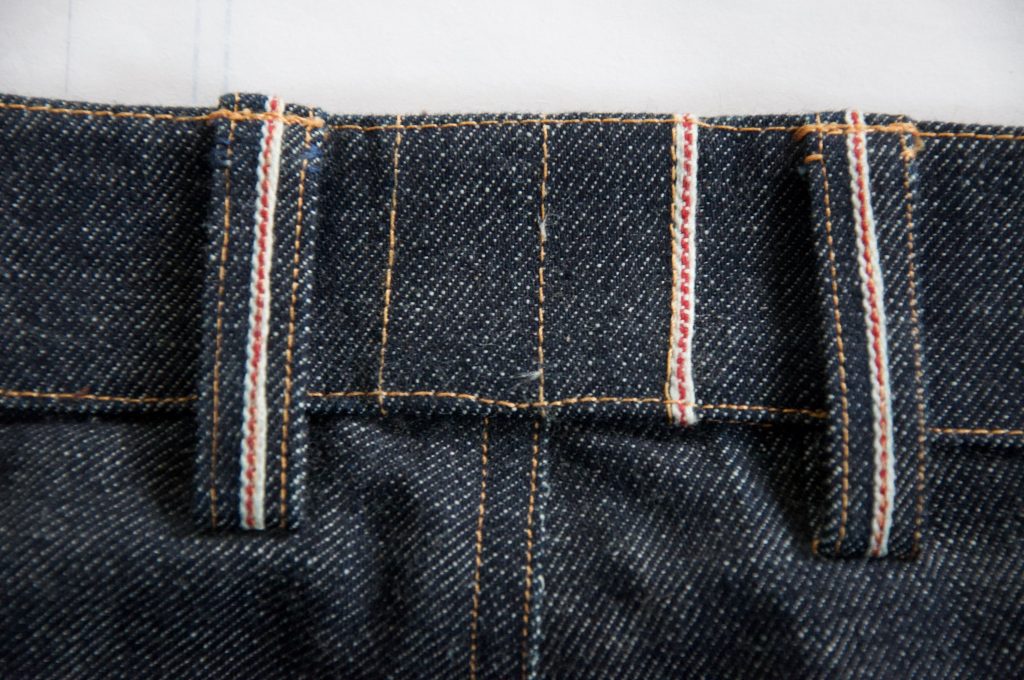
     I was sewing with selvage denim, but because of the shape of the leg I was unable to keep the selvage at the cuffs.  So I used the selvage for belt loops and got to show it off a bit at the waistband.
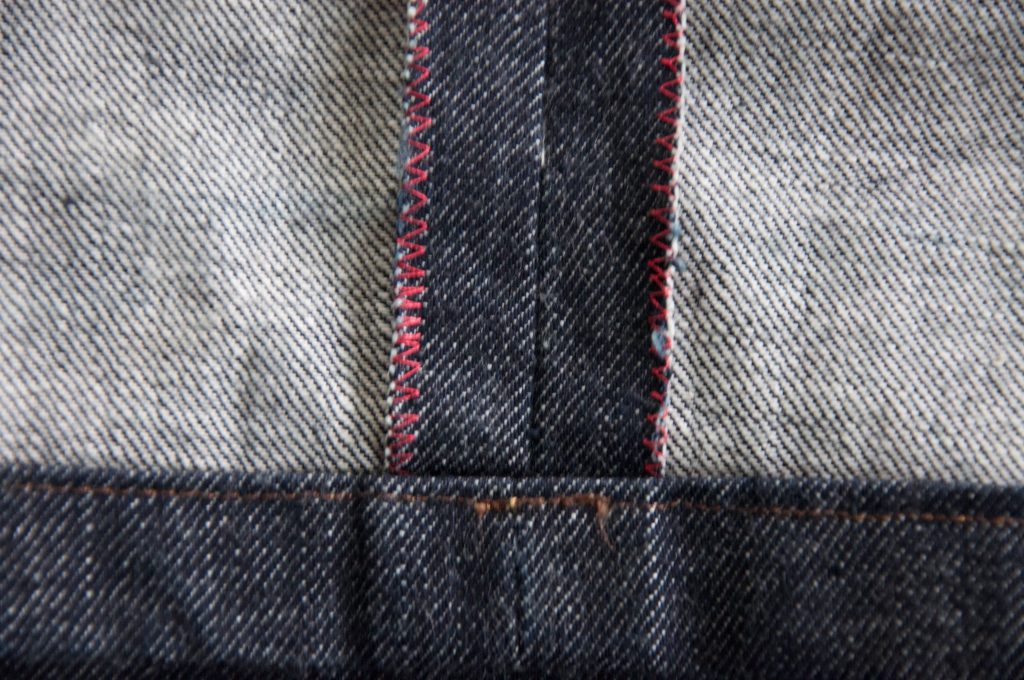
       I used Scanfil Organic Cotten thread in 50/2 weight to zigzag the fabric edges.  
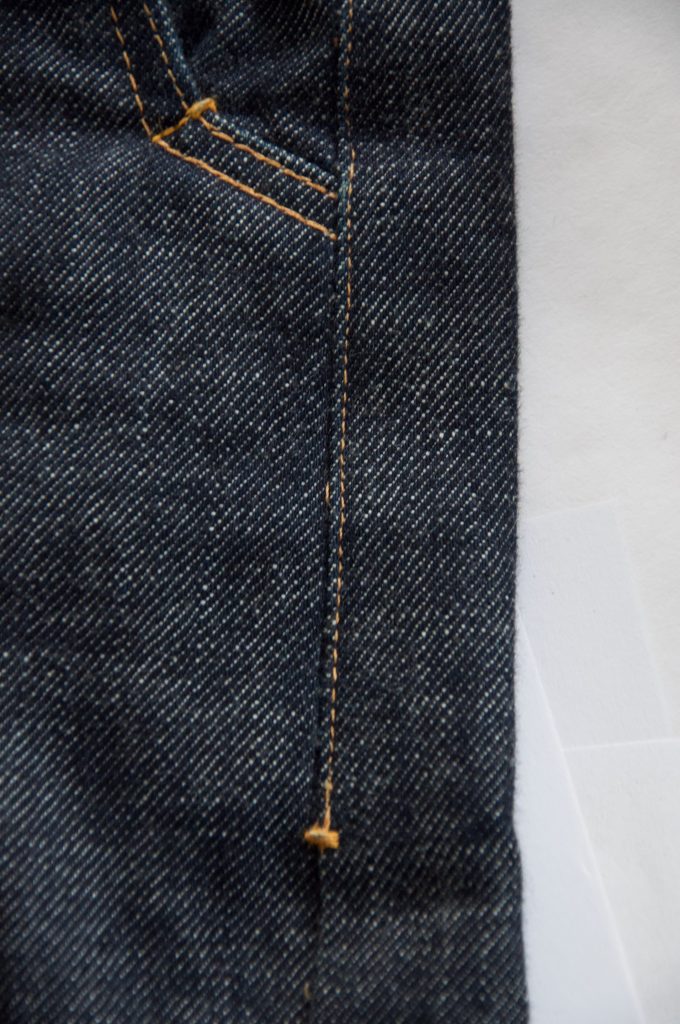
    And rather than using copper rivets, I hand sewed bar tacks and the places the need reinforcement.

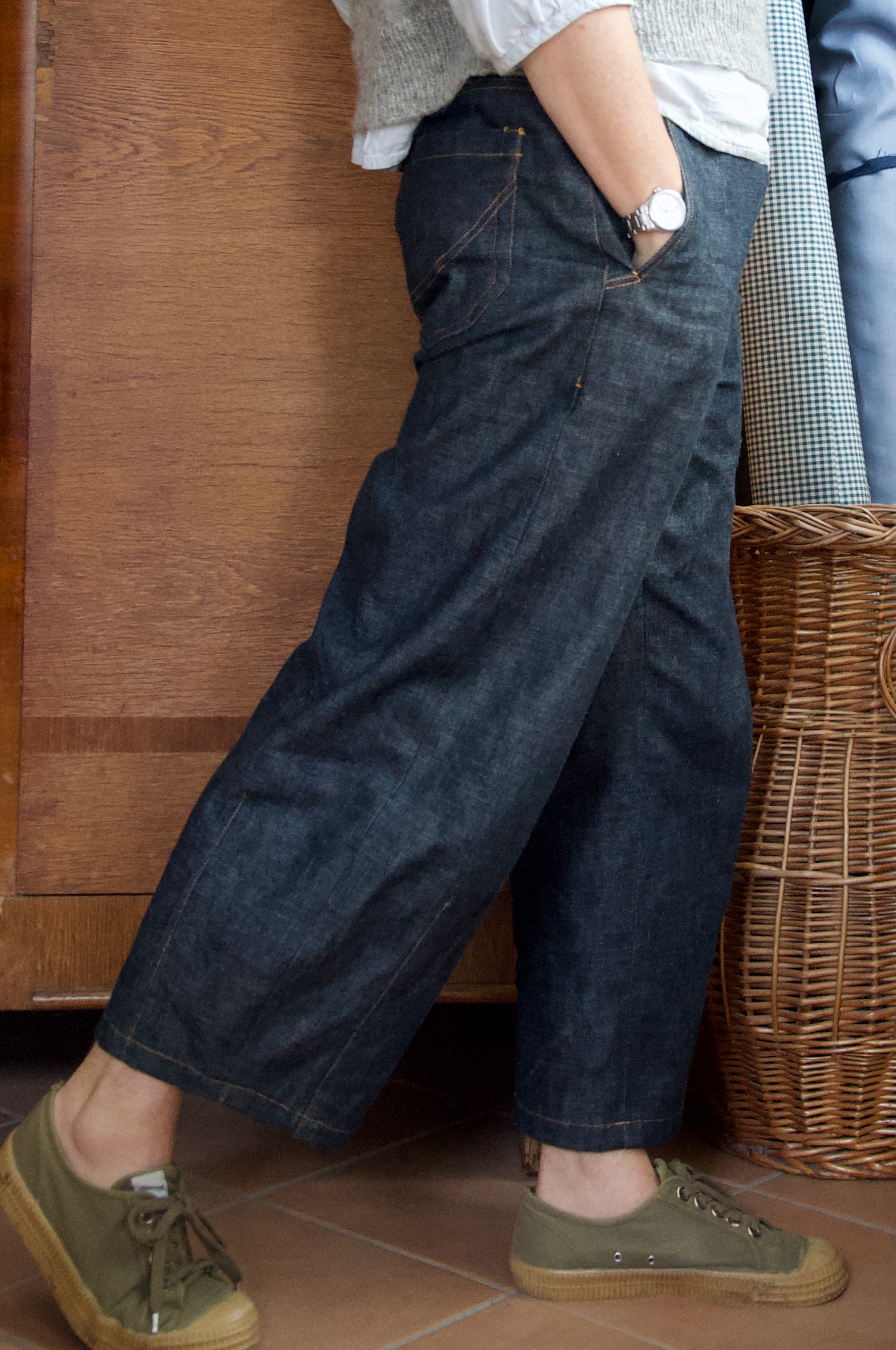
    Sewing with this denim on my old sewing machine was a dream. I used Scanfil Organic Cotton Thread in 30/2 weight for all seams. Visually it might be a little on light side for top-stitching truly traditional jeans, but from a functional perspective it is doing great. I used color #4804 for my top thread, and at first out of pure laziness (because it was already on my bobbin) I used color #4829 for the bottom thread. I am not sure if using two colors really led to a different visual effect, but I feel like it did, and will probably do the same thing the next time I sew with this denim, which will hopefully be soon, because I am hooked.