
(Author’s note, the sewing pattern and fabric mentioned in this post were purchased at retail price. I am very pleased with the fabric from Selvage and would love to figure out some sort of partnership in the future, but as of this writing (16.September. 2026) there is no such relationship. SELU does currently have a partnership with smartPATTERN, and offers a rebate code for the printing of sewing patterns from smartPATTERN. I will admit that this partnership gave me the push I needed to try sewing my first pair of jeans, but I like to think that it has not influenced my feelings for their patterns.)
Jeans are probably one of the most culturally complicated pieces of clothing in our wardrobes. Aside from questions like “do they actually fit” and “are they comfortable” they signal cultural belonging (or not) and cultural relevance (or not) more than another other piece of clothing. One can choose to be on-trend, or stubbornly on your own trend, or somehow miss the mark entirely and just have jeans that are can’t-put-your-finger-on-it not quite right. And that is all before even thinking about fabric. As we all know denim has its own passionate culture, with fine attention paid to weights and source and dyes. I found (and still find) it all a bit overwhelming, and so decided to avoid the whole topic entirely and stick to sewing trousers.
But then I sewed the KEJA trousers designed by smartPATTERN for TAUKO Magazine issue no 18, and had the good fortune to meet the designers behind smartPattern at a TAUKO event.
The pattern
One can buy smartPATTERN designs as one buys any normal sewing pattern, with a set design graded into a range of sizes, or one can follow their excellent video tutorials to measure various parts of your own body, and receive that design graded exactly to the measurements you provide. (You also then get to choose from a variety of pocket types, leg lengths, and in the case of their pattern for Barrel Jeans, exactly how much barreling and how the bend is achieved). As someone who always has to grade between hip and waist sizes (and needs to shorten the leg a bit) I found the custom pattern feature fascinating.
Instead of traditional written instructions, the instruction for smartPATTERN patterns are actually a series of video tutorials. I found this to be a little confusing at first, but as someone who often searches for video tutorials to help learn unfamiliar steps, I quickly got used to it.
The fabric
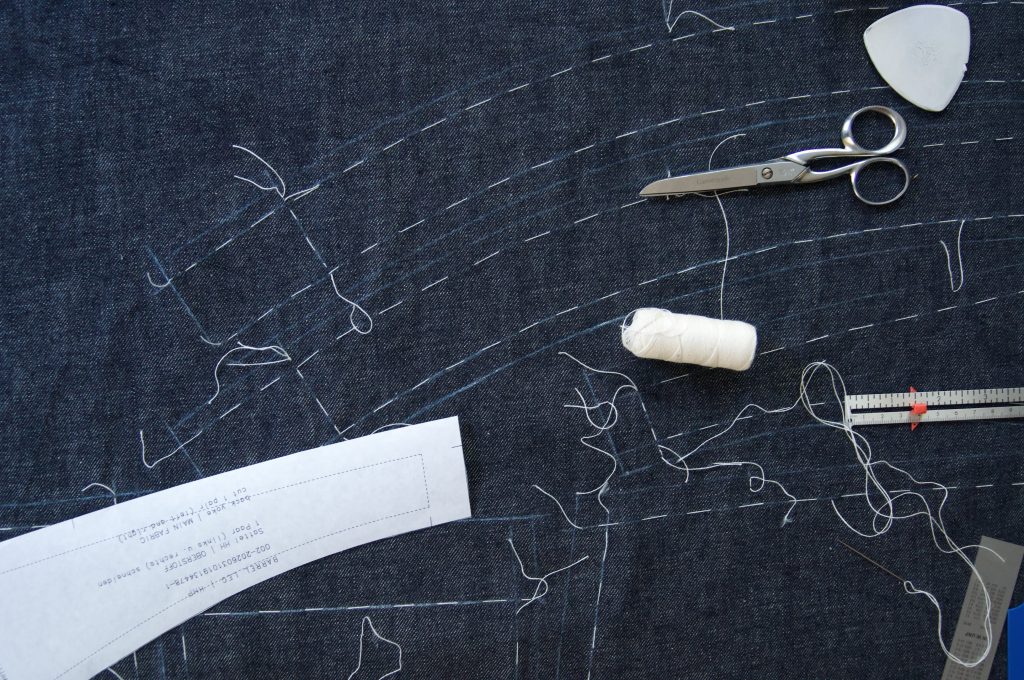
For the fabric I chose to order a 10.7 oz selvage denim (100% cotton) from the promisingly named Selvage, a shop in Berlin that imports Japanese denim. I am not a classic denim aficionado, but if I am going to go through the trouble of sewing something, I am going to use fabrics that interest me in some way. “Japanese Selvage Denim” has the kind of trendy cachet that generally makes me roll my eyes a bit, but after reading descriptions of how the weave actually does vary from denim produced on modern machines, I decided to look past the trendiness and give it a try. And I am glad that I did.
I am very pleased with the results.
The Results
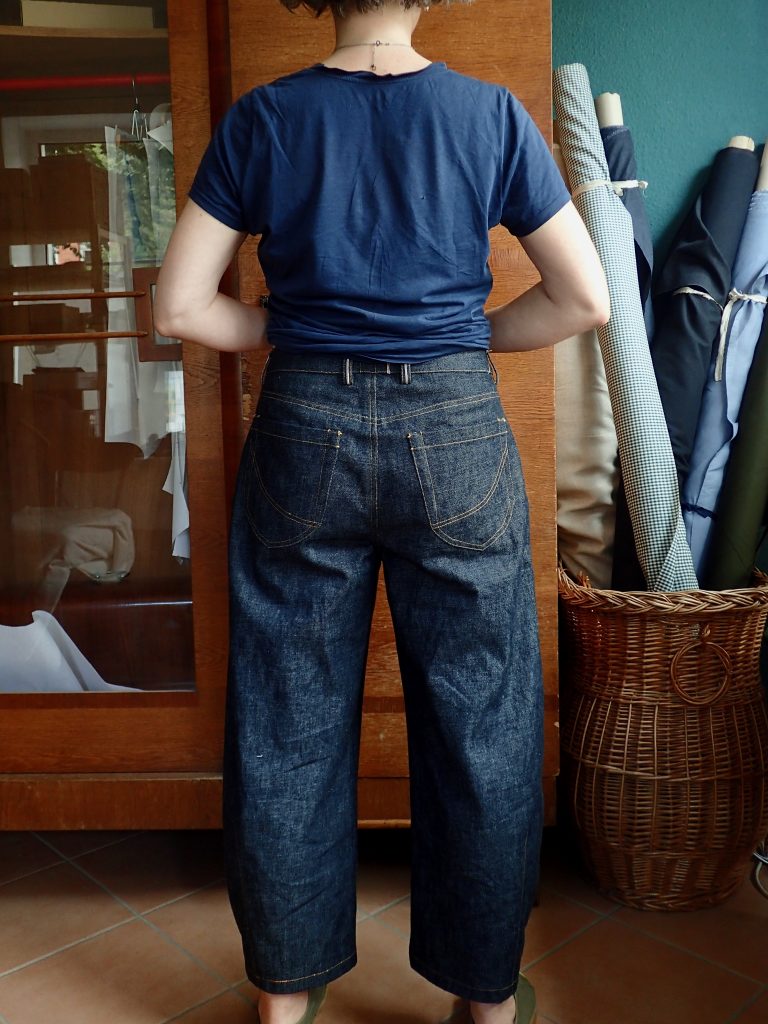
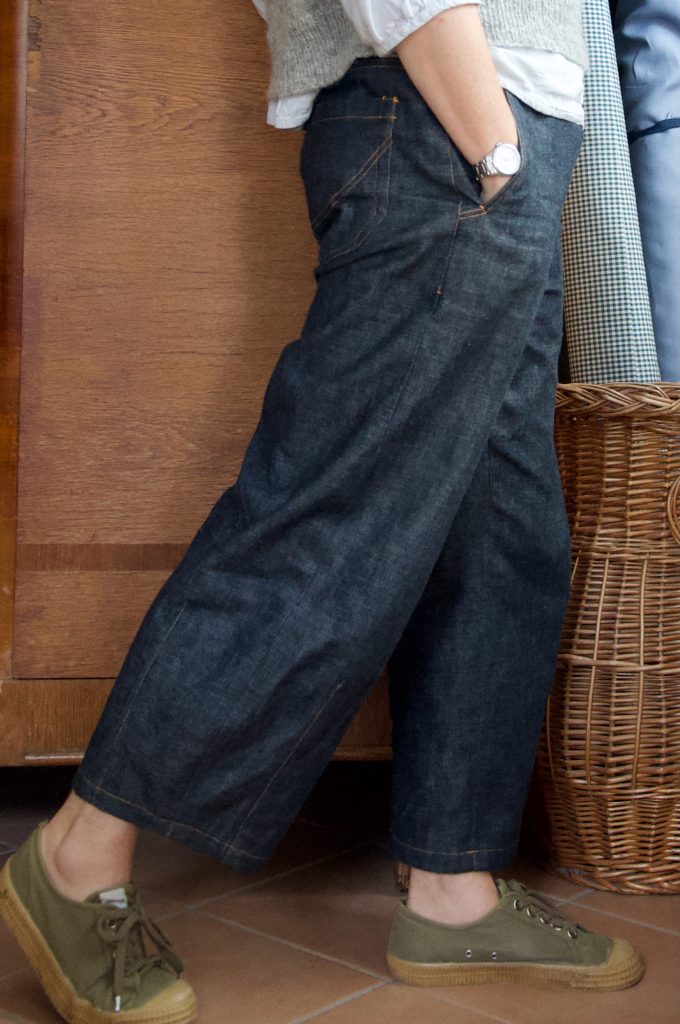
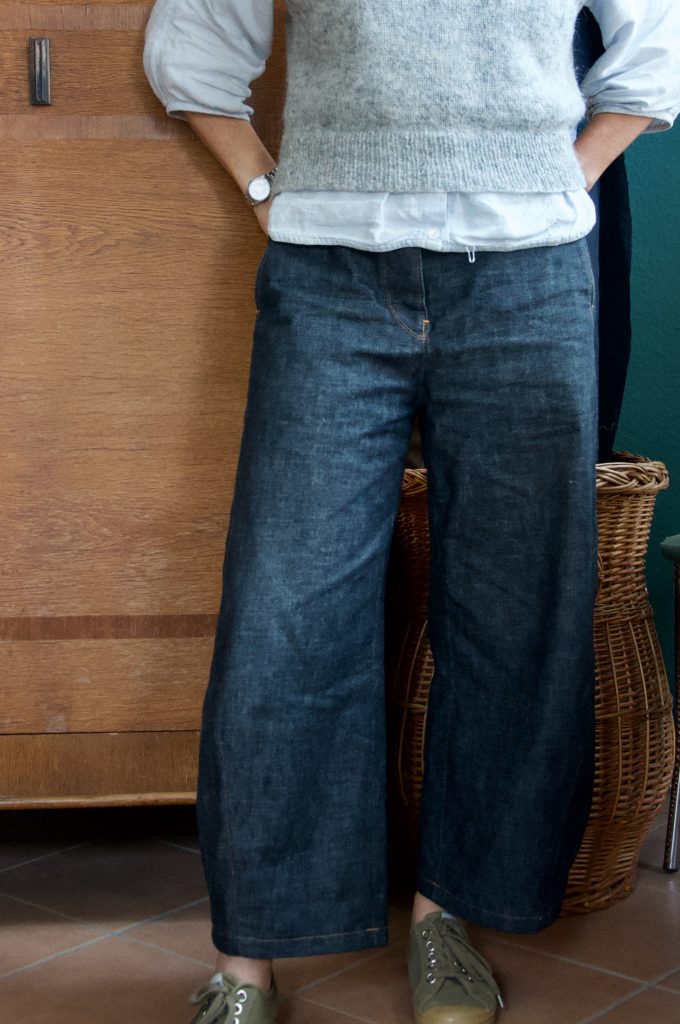
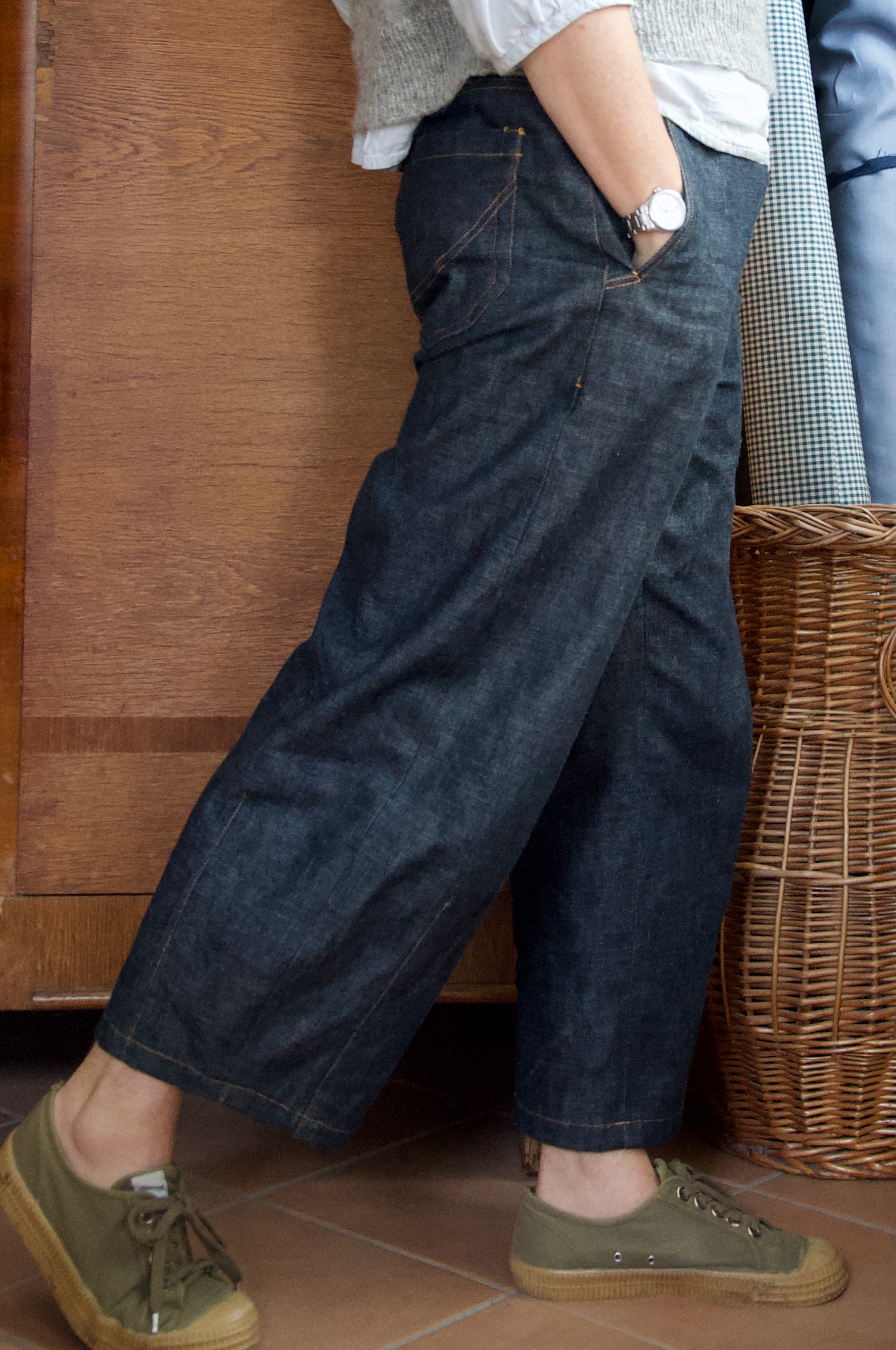
As always, it is the little details that make sewing for yourself so wonderful.
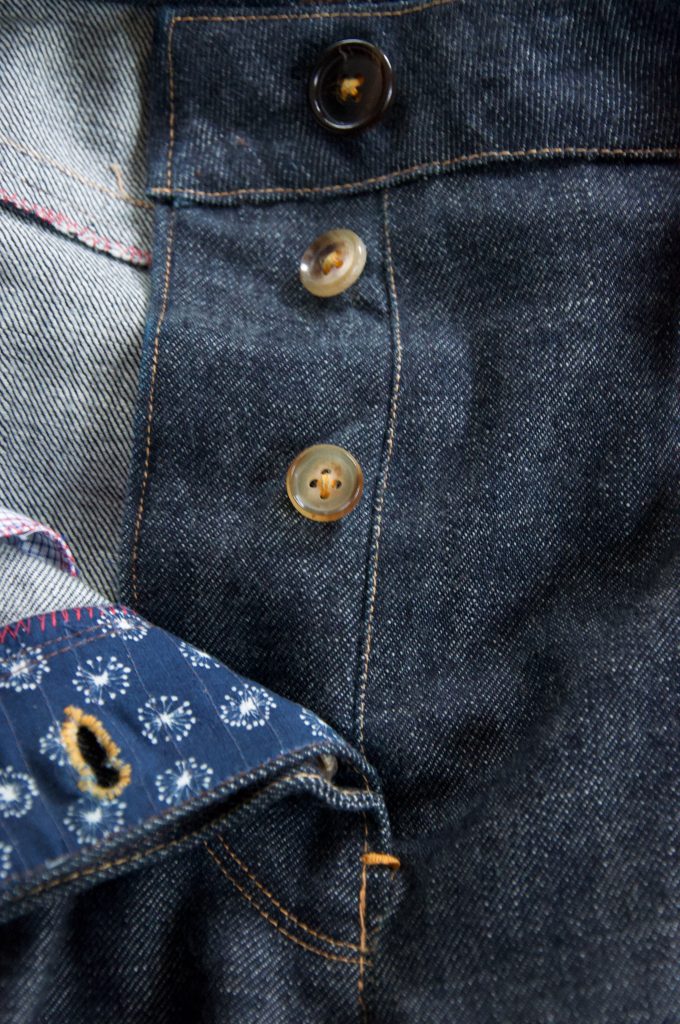
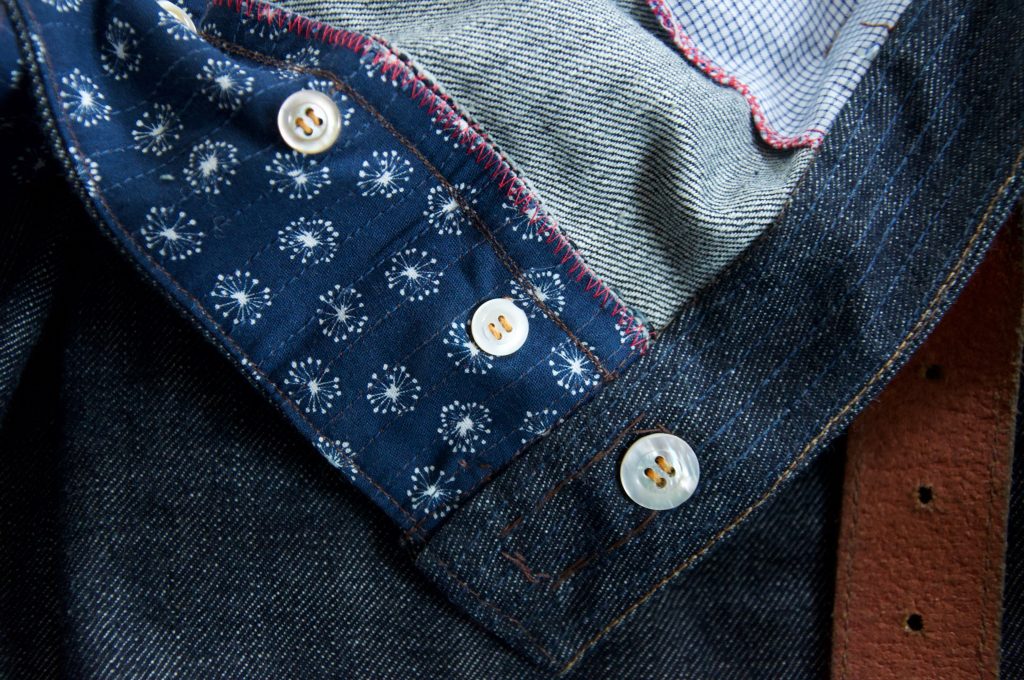
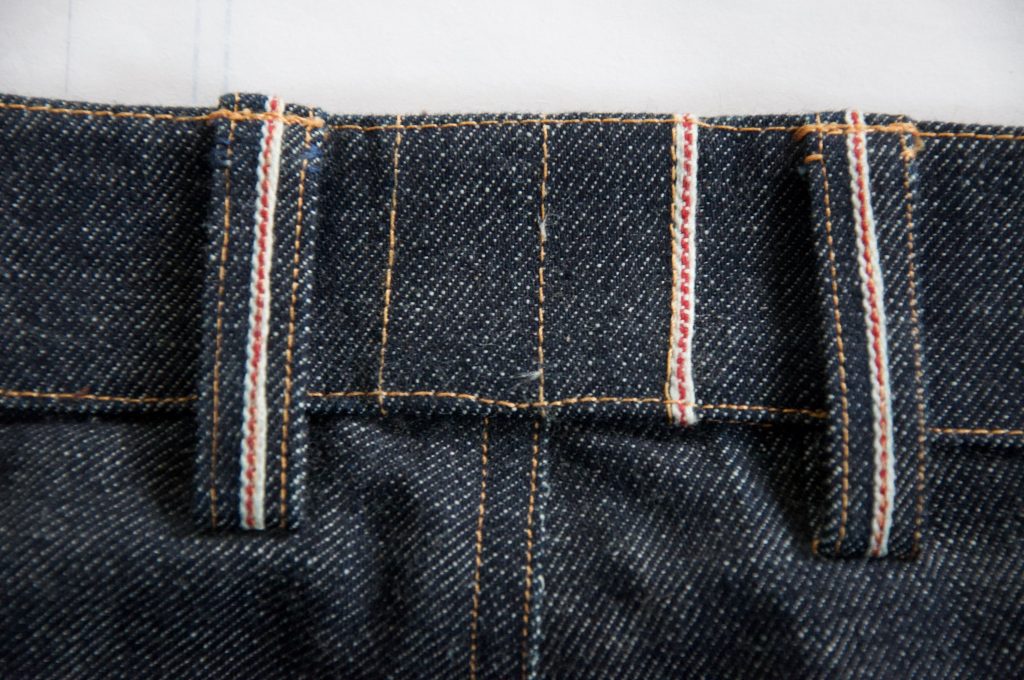
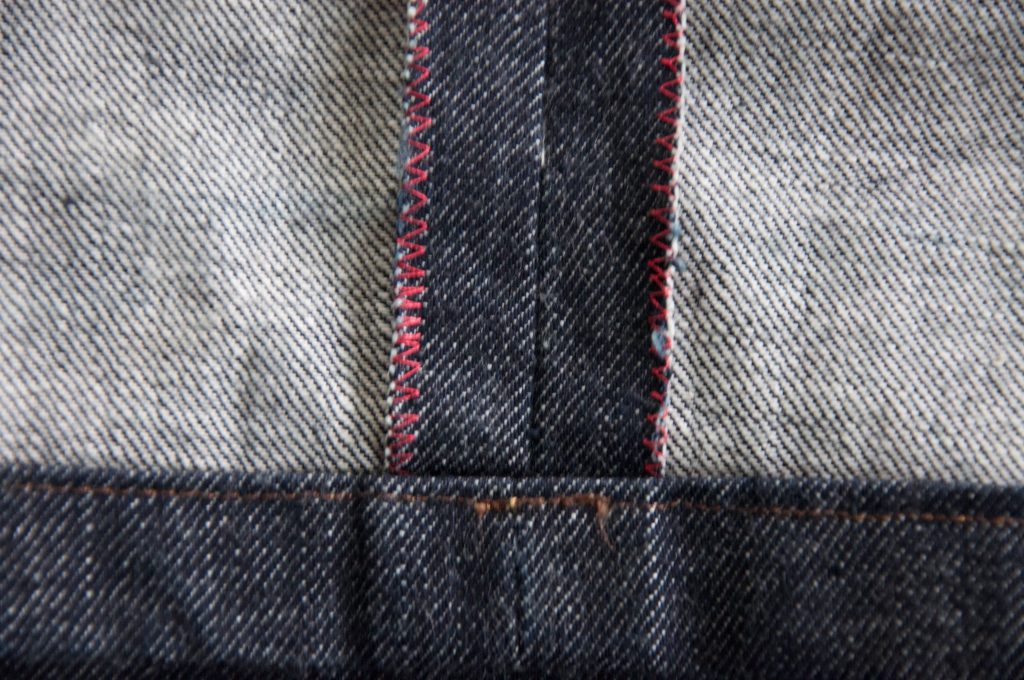
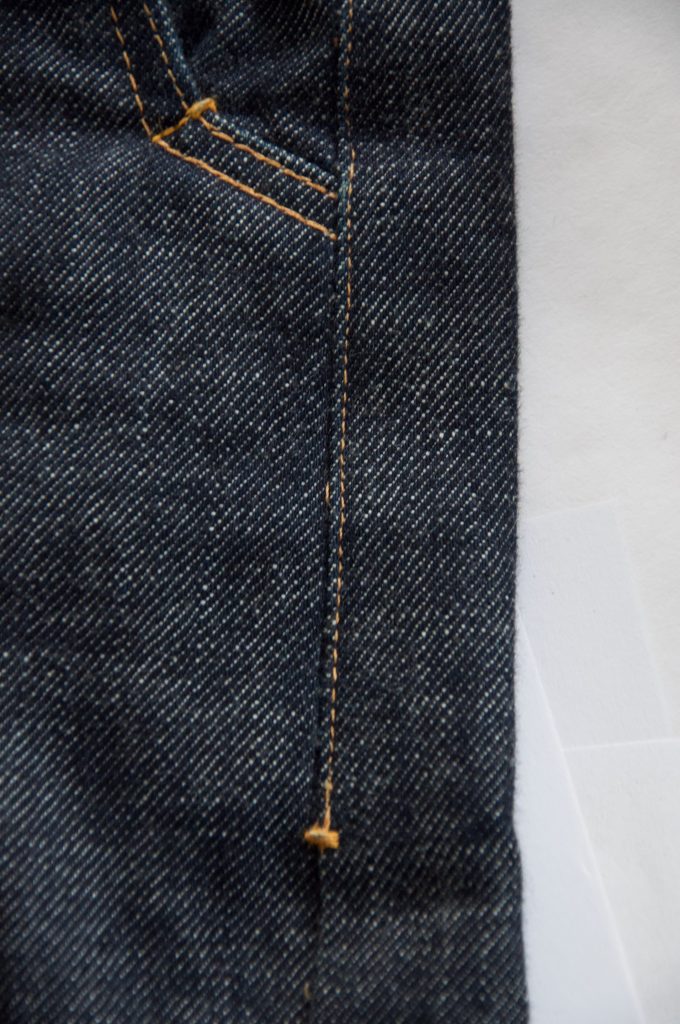
Sewing with this denim on my old sewing machine was a dream. I used Scanfil Organic Cotton Thread in 30/2 weight for all seams. Visually it might be a little on light side for top-stitching truly traditional jeans, but from a functional perspective it is doing great. I used color #4804 for my top thread, and at first out of pure laziness (because it was already on my bobbin) I used color #4829 for the bottom thread. I am not sure if using two colors really led to a different visual effect, but I feel like it did, and will probably do the same thing the next time I sew with this denim, which will hopefully be soon, because I am hooked.
Schreibe einen Kommentar
Du musst angemeldet sein, um einen Kommentar abzugeben.